Types of Grease Guns
- Huyett Marketing Department
- 02/15/2021
- Updated 06/27/2024
Grease
is an essential lubricant in many applications. Unlike oil, grease is
thick and sticks to the component surface, providing longer-lasting
lubrication. However, on its own, it is much harder to control during
application. Grease guns provide a clean and controlled application
method that moves grease directly from the gun through a grease fitting
coupler to a grease fitting, where it is evenly dispersed into the
application. Different types of grease guns have unique designs that
help facilitate lubrication in a variety of applications, from
high-volume manufacturing and commercial equipment to small, custom
projects.
What Is a Grease Gun?
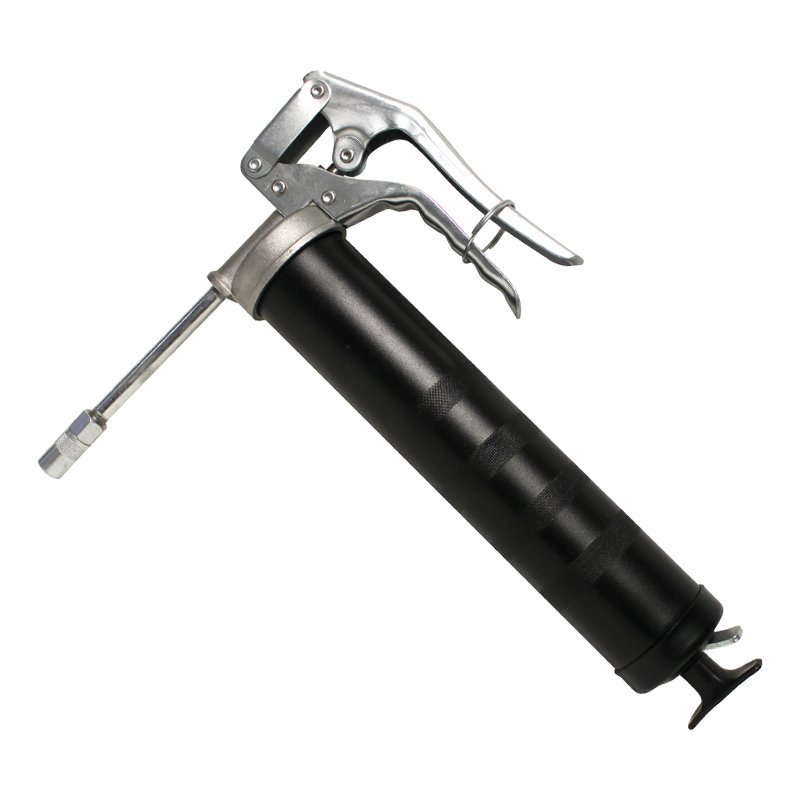
A
grease gun
is either a manual, battery-operated/electric, or pneumatic tool used
to pump grease into an application that needs lubrication, typically
ones with moving parts. It is used for precisely applying grease to
grease fittings
in various equipment types, ranging from passenger vehicles and lawn
equipment to aircraft and aerospace applications. It usually features a
cylindrical grease gun barrel to hold a grease cartridge, a trigger or
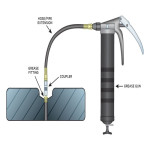
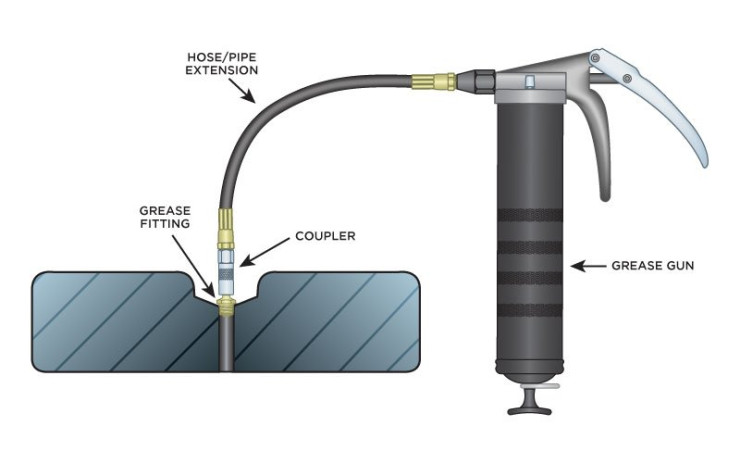
plunger for pumping the grease out of the barrel, and a grease fitting
hose, extension pipe, or nozzle.
Grease Gun Types
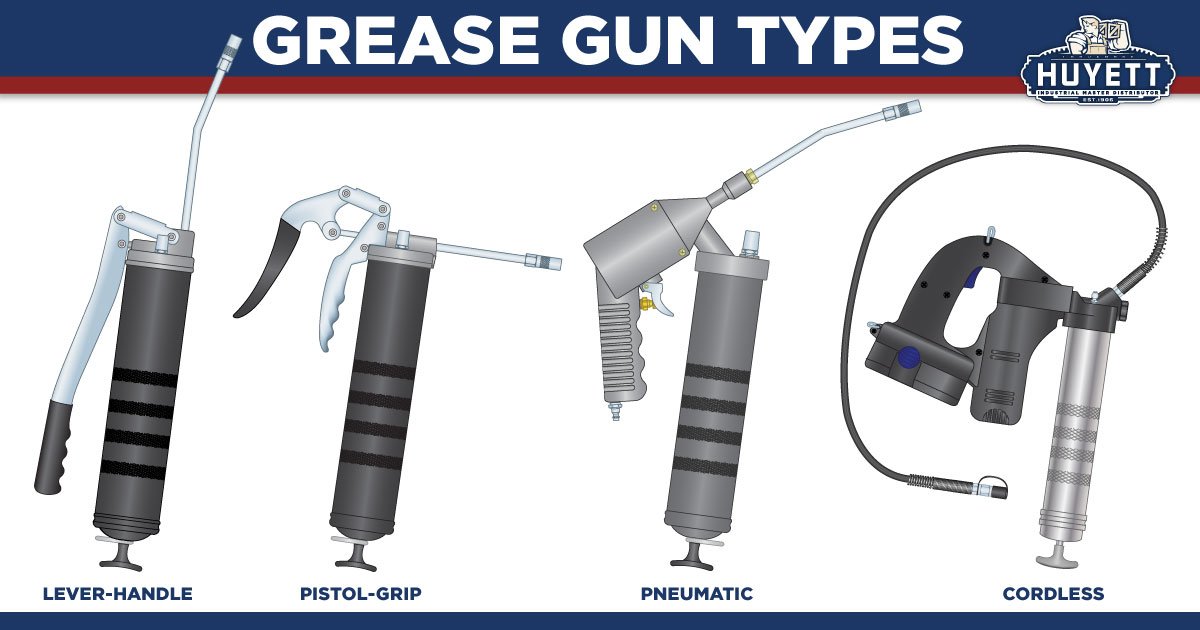
There are many different designs and types of
grease guns, each one suited for specific application needs. For
example, manual grease guns - like lever-handle and pistol-grip guns -
are easy to use but may not be as conducive to high-volume applications.
On the flip side, pneumatic and cordless/electric grease guns are
better suited for high-volume setting but tend to be a bigger
investment.
The four most common types of grease guns are
divided into two categories: manual and automatic. Within the manual
category, lever-handle and pistol-grip pistols are the most popular
options. As for automatic options, air-powered and battery-powered are
the preferred choices.
Types of Manual Grease Guns
Manual grease guns tend to be the more
economical choice, partly because they are hand operated and partly
because they do not require additional equipment to work. These guns are
ideal for low-volume applications like personal projects/equipment or
repairs on older automotives. They are also better suited to
applications that require more precise grease disbursement, as the
handheld trigger or lever allows the user to control the grease flow.
There are two main types of manual grease guns available: lever-handle
guns and pistol-grip guns.
Lever-Handle Grease Guns
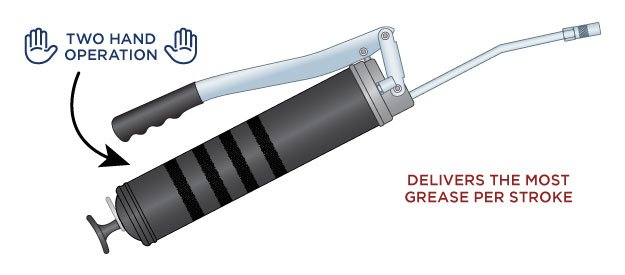
Lever-handle grease guns
provide the most volume/stroke as compared to other manual guns. To
operate, the user will need to hold the gun in one hand and pump the
lever with the other; this requires more room and “elbow grease” than a
pistol-grip gun needs, but it facilitates more lubrication with one pump
of the lever. Considering these characteristics, they are well suited
for applications with controlled lubrication needs that do not require
high-production, repetitive use.
Pistol-Grip Grease Guns
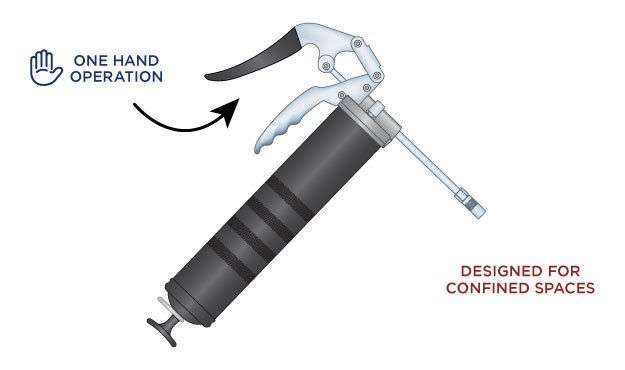
Pistol-grip grease guns
offer a more compact solution for tight, awkward, or enclosed spaces.
Using just one hand to pull the trigger, these guns require less energy
and space to operate. Since the trigger does not provide as much
pressure as a lever, pistol-grip options do not disperse as much
grease/stroke. Consider this option if the application is low volume, in
a small or awkward space, and would require controlled lubrication
disbursement.
Automatic grease guns facilitate lubrication
through an attached source of power. The two most common types of
automatic grease guns are air-powered (pneumatic) and battery-powered,
each of which provide significant pressure to discharge the grease
without taxing the user, who only needs to pull the trigger. While these
guns are more expensive and do not control the grease flow like a
manual grease gun, they are well suited for high-volume and repetitive
lubrication applications and often handle cold temperatures more
efficiently than their manual counterparts.
Pneumatic Grease Guns
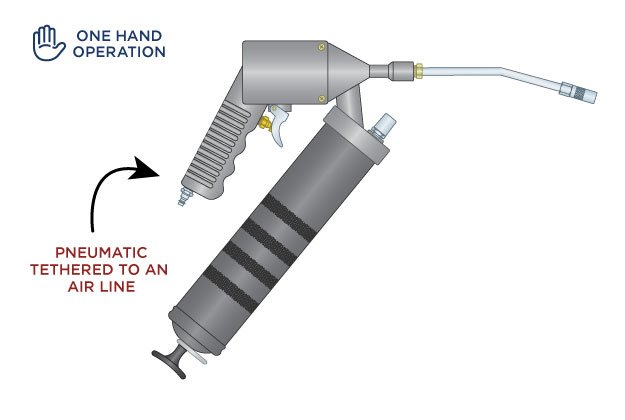
Pneumatic grease guns
use a compressed air supply to deliver a steady, consistent, and
high-powered grease flow. Since the pressure is enhanced (even compared
to other automatic grease guns), they are well suited to industrial and
high-volume applications (they are also effective when paired with bulk
loading equipment). It is important for the user to be trained in
handling this particular type of grease gun; misuse poses more risk
since the gun is powered by compressed air. Considering this, they are
more suited for professional work.
Battery-Powered Grease Guns
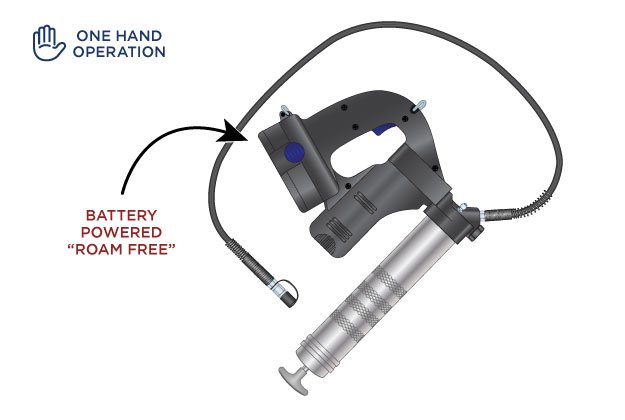
Battery-powered grease guns are cordless
and use rechargeable batteries to stay portable and easy to use. They
deliver grease at a much higher volume and do not require “elbow grease”
from the user; this helps prevent the user from tiring during long,
high-volume, or repetitive jobs. Since the gun is not manual, it is
harder for the user to manage the grease output. However, this is not as
important if the application does not require significant lubrication
control.
As with any tool, care should be taken in
selecting the right grease gun for the application. Over lubricating or
using the wrong grease can damage the grease fitting, the gun, or both.
Also, the grease itself can be a health concern if allowed to penetrate
the skin. Below are some important points to consider when buying a
grease gun.
Application
First, define the use. Will the gun be used in
commercial, industrial, or custom/small operations? How often will it be
used? Does the grease flow need to be controlled? Will the gun need to
operate under extreme temperatures? Is it far away from a power source?
What kind of equipment will it service?
Pressure
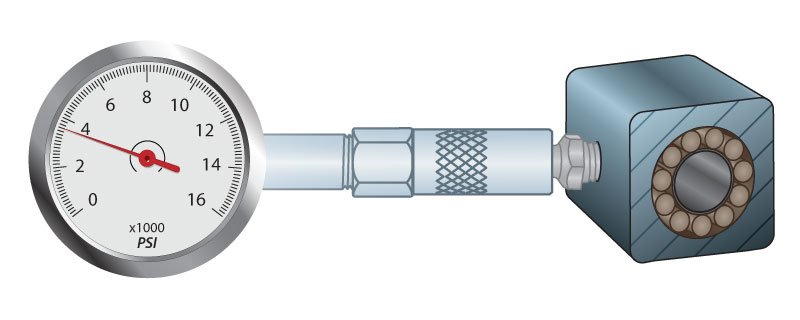
Second, assess the pressure requirements.
What pressure is needed to open and dispense grease in the application?
High pressure is needed to "unfreeze" clogged fittings with heavy
lubricants or in cold weather.
Accessibility
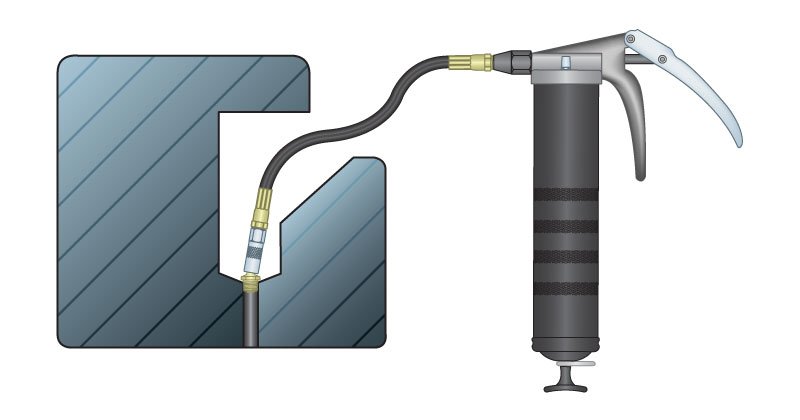
Next, determine space, clearance, and
accessibility. Consider awkward angles, reach, tight spaces, etc. The
gun must allow a compatible grease gun coupler to access the greasing
point and leave enough room to operate it according to its design. The
user may want to consider grease fitting hoses, pipe extensions, grease
fitting adapters, or
angled grease fitting couplers to increase accessibility to the application.
Lubrication
Last but not least, evaluate the type of
grease needed for the application. Consider its viscosity, performance
under pressure, base makeup, dropping point, etc. This will help the
user estimate how it will perform under different application and
environmental elements.
Grease Gun Lubricants: What to Consider
Once the user has selected a grease gun,
it is important to select the right grease lubricant for the
application. The following list, though not exhaustive, points out three
key factors to consider when choosing an appropriate lubrication.
- Base Oil Viscosity: Grease is largely made up of oil, which is then supplemented with additives and thickeners. The base oil viscosity (typically between 20-500mm² at 40°C) is the foundation of the overall grease thickness. This is a main factor in determining if the grease is appropriate for the application.
- Additives/Thickeners: Additives fortify the grease with performance-enhancing elements, like antioxidants, rust and corrosion inhibitors, antiwear capabilities, pressure performance capabilities, etc. Thickeners are added to manipulate the grease consistency independently from the base oil viscosity; application speed and temperature are two influential factors in choosing the correct consistency.
- Dropping Point: This signifies the temperature at which grease changes consistency from semi-solid to liquid. It helps identify how hot the grease can get while still maintaining its operational thickness, although that is different than its maximum temperature before it becomes unusable.
Whatever grease is chosen for the
application, the most important factor is using it consistently and in
accordance with the application requirements.
Grease Gun Accessories
There are several accessories that help
increase a gun's reach into the application. The accessories typically
help the gun overcome spacing obstacles like tight fits, awkward angles,
and hard-to-reach areas. They also make the gun more versatile by
allowing it to connect to a variety of different grease fittings.
- Grease Gun Couplers (learn more about these accessories in our Grease Gun Tips and Couplers guide)
- Flexible Grease Hoses
- Adapters and Bushings
- Grease Fitting Tool Parts and Accessories, including (but not limited to):
- Grease Gun Barrels
- Batteries and Chargers
- Gun Holders, Sleeves, and Straps
- Bulk Loader Fittings and Bleeder Valves
How to Use a Grease Gun
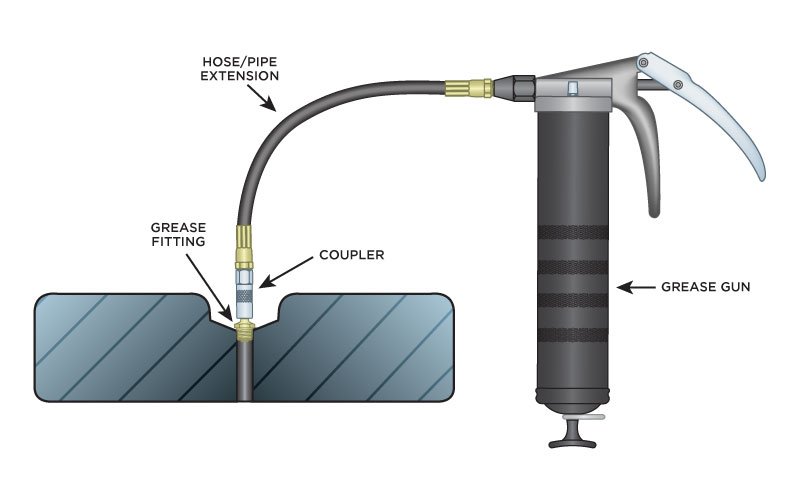
To begin with, you will first need to load
it (this is covered in detail below). Next, connect the nozzle to a
flexible hose or pipe extension, which will funnel the lubrication from
the gun into the application. Attach a coupler to the end of the hose or
extension and snap it onto an installed grease fittings (
learn how to install grease fittings here) - it should lock into place for a leak-proof seal.
How to Load a Grease Gun
Grease guns are typically loaded in three
ways: cartridge, suction, and bulk load. The following section details
these methods to help you choose the gun and accessories best suited for
your application.
Cartridge Load
The gun is filled using packaged
cartridges. These cartridges are convenient but are more costly than
bulk loading and can negatively impact the environment because they are
single-use.
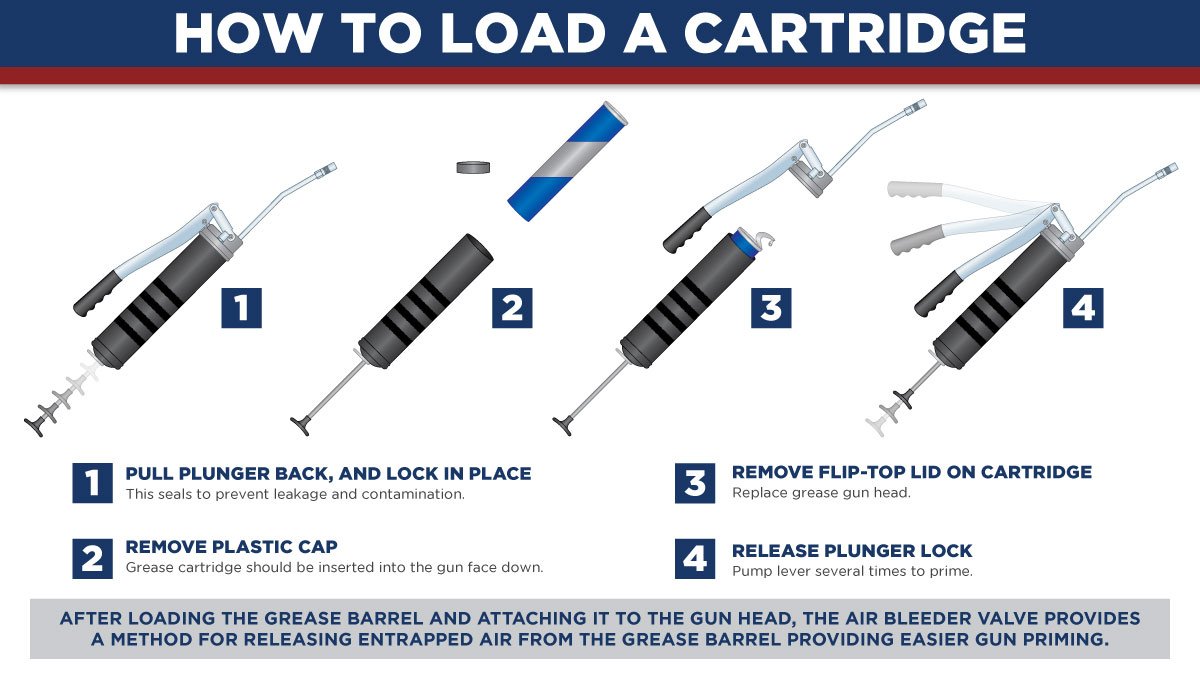
- Unscrew the canister from the grease gun and pull back the plunger, locking it in place.
- Remove the plastic end cap of the new cartridge and insert into the canister open end first.
- Once inserted, remove the top lid of the cartridge and reattach the canister to the grease gun head.
- Action the pump of the gun until grease flows out of the coupler.
Suction Load
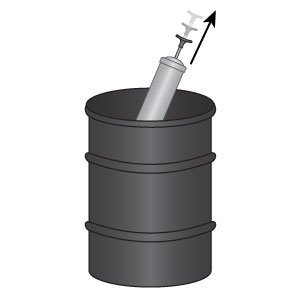
Suction load means the gun is filled manually
from a bulk drum by inserting the end of the gun into grease and
pulling up on the handle. This method is best suited for lighter grade
grease, as it tends to be difficult to extract heavy grease.
- Unscrew the canister from the grease gun.
- Push the open end of the canister into the grease drum so that the end of the canister is completely submerged in grease.
- Grasp the handle of the plunger on the grease gun canister and draw it back to pull grease into the canister.
- Reattach the canister to the grease gun head and push the plunger forward.
- Action the pump of the gun until grease flows out of the coupler.
Bulk Load
Bulk loading is the easiest, cleanest, and
most cost effective method of reloading a grease gun. Using bulk loading
to reload your gun will necessitate purchasing the following items:
How to Bulk Load
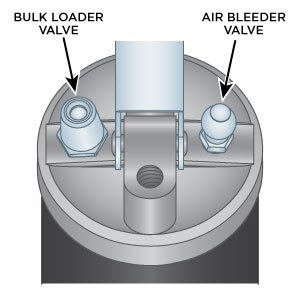
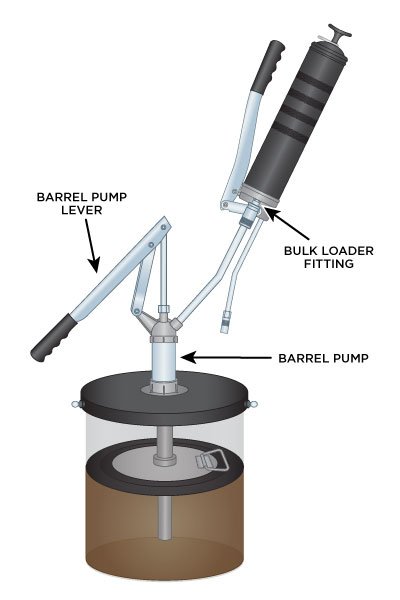
A barrel pump is installed onto a pail or bucket
of grease. The gun's loader fitting is pressed onto the loader coupler
on the pump. As grease transfers, some air may enter the gun which may
be vented by the air bleeder valve. The follower plate will minimize air
pockets in the bulk grease.
Least environmental impact. No cartridges to discard in landfill.
- Push the loader valve of the grease gun into the coupler on the bulk grease drum.
- Begin pumping the handle of the drum to push grease into the grease gun canister.
- Pump grease into the grease gun canister until the grease gun is full.
- Action the pump of the gun until grease flows out of the coupler.
 History of Grease Guns
Grease guns (and fittings) were invented in the
early 1900s as a remedy for the difficult relubrication process in place
to reservice die casting machines. Arthur Gulborg, son of a die-casting
manufacturing plant owner, developed a rudimentary lubrication system
consisting of a grease fitting, a hose, and a pump screw-type grease
gun. This make-shift solution opened the doors to the 100+-year
expansion of both the lubrication and the automotive industry.
The following timeline illustrates the general
history of how these important components came to evolve within two of
the country’s most distinguished lubrication companies:
Alemite® and
Lincoln Industrial® (now an SKF ® subsidiary).
Alemite® Grease Gun History
- 1916: Arthur Gulborg develops the first grease pump to alleviate difficult relubrication processes at the Alemite® Die Casting and Manufacturing plant in Chicago.
- 1918: Gulborg and his father introduce the entire Alemite lubrication system to the U.S. Army, who embraces it as a standard in the summer of the same year.
- 1922: Alemite invents a similar lubrication system with the Button Head design, expanding into civilian industries with heavy-duty applications, like construction.
- 1924: Alemite buys the Allyne-Zerk company, who has at this point invented a much smaller fitting that is gaining in popularity for its efficiency and wide-spread use. Alemite starts selling the Zerk lubrication system, including the P-25 and P-100 air-powered grease gun, to service stations.
- 1920s – 1940s: Alemite lubrication systems continue to advance and develop, making their way into service stations, portable systems for in-field lubrication, the aviation industry, and more.
- 1950s – 1960s: Alemite continues to launch new lubrication system lines, including one of liquid- and corrosion-resistant pumps and others specialized for unique industries.
- 1980s – early 2000s: New grease gun designs become available with increased capacities, more efficient pumping mechanisms, battery-operated options, and customizing characteristics.
- 2010s – present: Grease gun capabilities and designs continue to expand as technology and demand increases.
- 1910: John Lincoln founds Lincoln® Engineering in Cleveland, Ohio.
- 1917: As the automobile industry flourishes, Lincoln takes their mine car lubricator and adapts it for general service station use.
- 1920s: Lincoln invents the Lubrigun®, which manifests in eight different versions and sells prolifically through the decade.
- 1930s: New inventions continued, notably the Centro-Matic® lubrication system.
- 1940s: Lincoln supplies the military with grease guns and fittings, including specialized gas-powered grease guns. Other pump innovations continued to improve and develop.
- 1950s – 1960s: Specialized lubrication lines are enhanced/developed for large-machinery industries, like agriculture and mining.
- 1970s – 1980s: Electric grease guns and the PowerMaster® series are introduced.
- 1990s – early 2000s: Battery-powered and dual-leverage grease guns become available.
- 2010s – present: Existing designs continue to advance and change to meet growing customer needs.
Grease
guns are an essential component of a lubrication application. Different
types of grease guns offer unique benefits conducive to specific
application requirements. These tools, along with their accessories,
provide you with ways to customize your gun to fit your needs.
Huyett
offers a variety of grease guns from trusted brands like Alemite® and
Lincoln® that work with our complete line of grease fittings and grease
fitting tools & accessories. To learn more about these products,
visit our
Grease Fitting FAQ page and our
Lubrication Accessories FAQ page.
Informative Guide to Grease Gun Coupler Types
- Huyett Marketing Department
- 06/08/2023
- Updated 7/24/2024
A
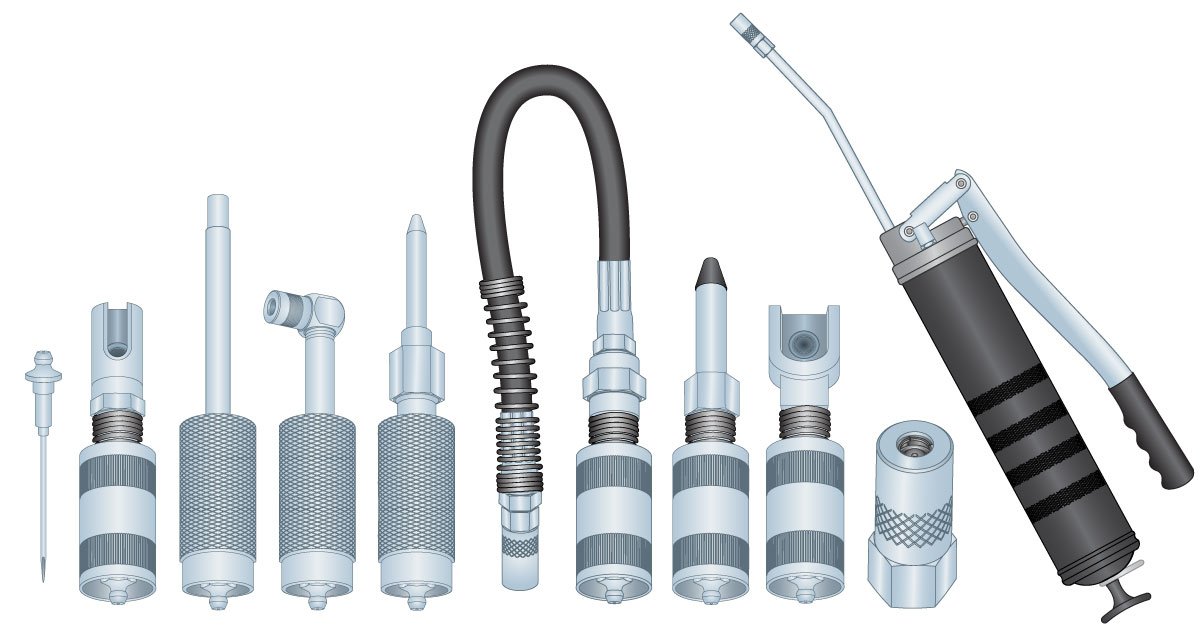
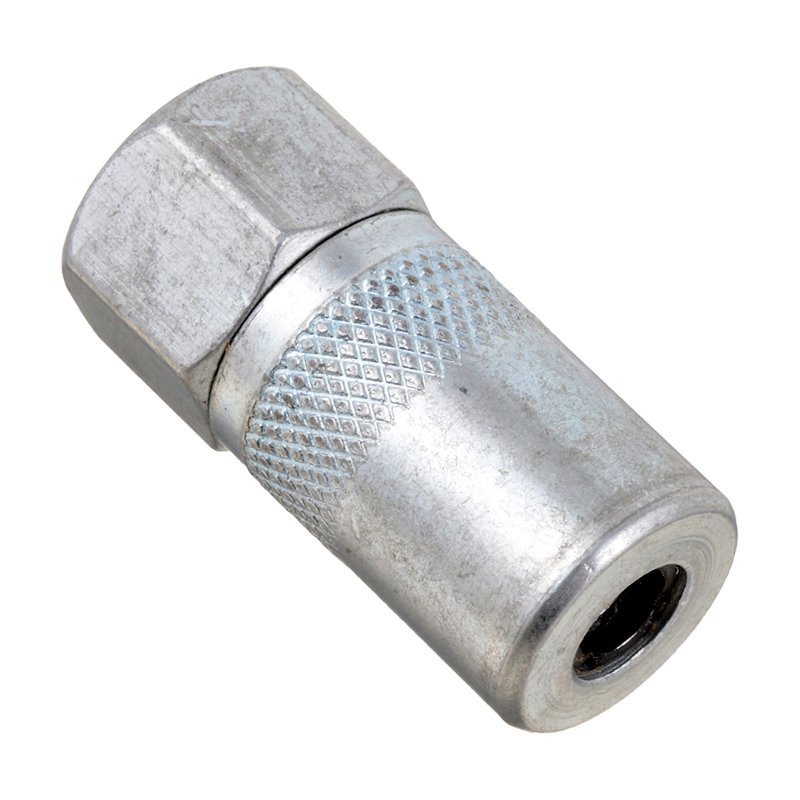
grease gun coupler (or grease gun tip) is a cylindrical fitting that connects to the end of a
grease hose or a pipe extension; the hose or pipe is connected to a
grease gun,
which allows the whole connection to pump grease through the hose/pipe
into the coupler. The coupler acts as the conduit between the gun and
the grease fitting and houses a set of internal jaws that secure to the
zerk fitting for a leak-proof seal. When setting up your lubrication
application, it is important to consider which type of grease coupler
you will need to properly lubricate your grease fitting.
GREASE FITTING COUPLERS
GREASE GUNS
GREASE FITTINGS
There
are many types of grease gun tips – some are designed to fit specific
zerk fittings, while others are designed to expand the gun’s versatility
with features like angled attachments, swivels, etc. Grease gun
couplers generally adapt to different zerk sizes of the same style, but
that may vary depending on the components and application. You should
always check the parts yourself to ensure a proper connection before
use.
Three of the most common grease gun coupler
types are standard, quick connect, and loader couplers. Four less common
grease gun tips include button head, pin type, needle nozzles, and
flush type couplers.
Download our Grease Gun Coupler and Mating Grease Fittings quick guide
here.
Standard Grease Coupler
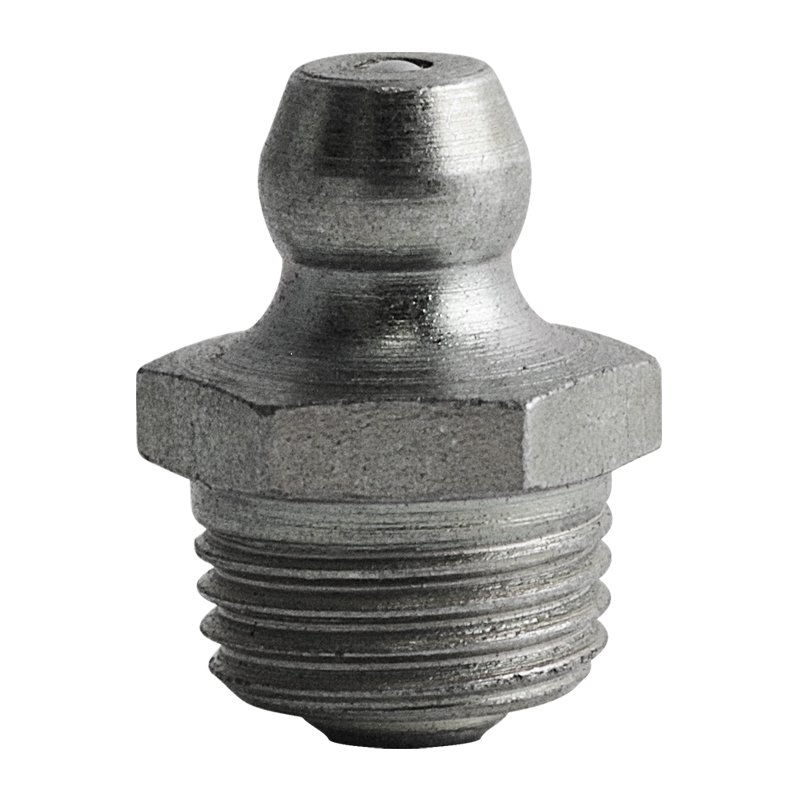
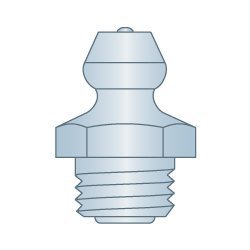
The
standard grease coupler (also called a hydraulic coupler) is designed to fit
standard grease fittings
or fittings with standard nipple profiles, which covers most of the
common zerk fittings in use. The hydraulic option is a simple tip that
attaches to the end of a hose or pipe extension to transfer grease on
its own, but it can also act as a mount for other types of couplers.
There are two subtypes of these components:
conventional
and
special use
.
Conventional
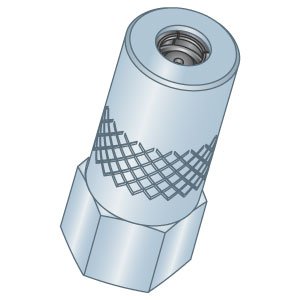
This covers the typical, cylindrical
coupler with the normal attachment mechanism (no angle or flexibility).
The bodies are either narrow (which provides better reach in tight
spaces) or standard size with either a three-jaw or four-jaw set.
Special Use
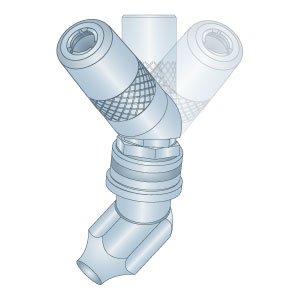
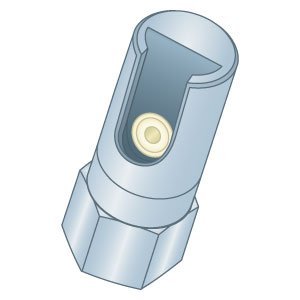
Special use couplers have one of two
unique features that allow the coupler to reach into odd spaces. Some
feature a swivel head that can adapt to a range of angles, while others
have a built-in 90° angle head or slot so the tip can access the zerk
perpendicularly.
Quick connect grease couplers are
a set of tips that connect and disconnect from hydraulic couplers,
making the gun more versatile in an in-field or mobile setting. When
mechanics need to service multiple types of lubrication applications
with a portable tool kit, these removable components allow them to
quickly change out tips instead of replacing the core hydraulic grease
coupler or the entire gun.
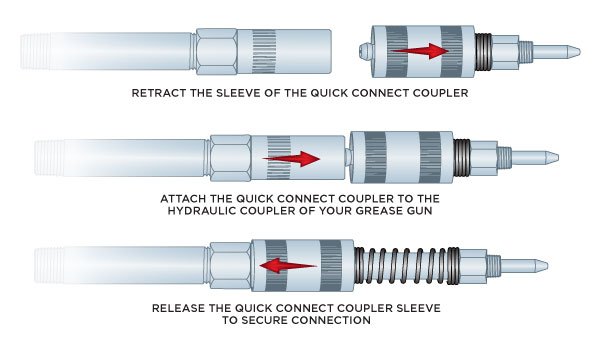
To attach a quick connect tip, pull the
spring-loaded sleeve towards the top; this exposes the tip’s internal
grease nipple. Attach the tip to the hydraulic coupler, then release the
sleeve. The sleeve's jaws will lock onto the hydraulic coupler.
Loader Grease Coupler
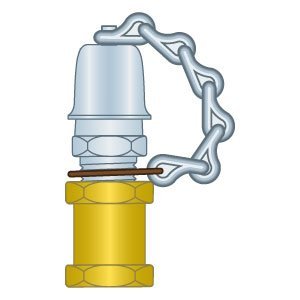
Loader grease couplers
are specifically designed for bulk lubrication loading systems, in
which a grease gun is filled with grease from a bulk barrel rather than
an individual cartridge. This works well in high-volume settings where
it would be costly to use large amounts of cartridges or when
environmental impact is a concern.
This is the only coupler that does not
transfer grease from the gun to the application; it only moves it from
the bulk barrel into the gun.
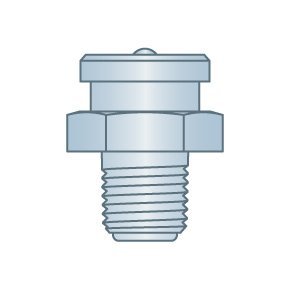
Button Head Grease Coupler
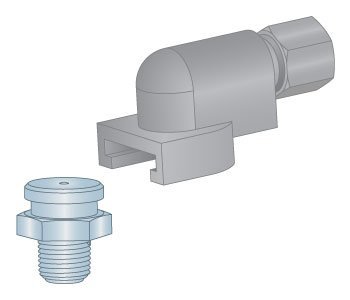
Button head couplers are designed to fit over the unique profile of
button head zerk fittings.
These fittings have a smooth, flat head with a low profile and a small
grease nipple. The corresponding couplers feature slots on the bottom of
the tip that fit over the zerk head and a threaded hole above it at a
90⁰ angle for grease gun attachment.
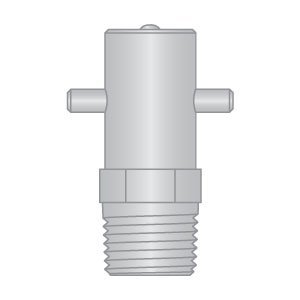
Pin Type Coupler
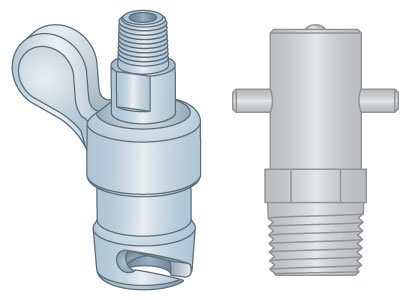
The
pin type coupler is designed to be used with
pin type grease fittings,
a unique type of fitting that features a cross pin sticking out from
the zerk head at a 90⁰ angle. This was one of the first zerk fitting
designs ever manufactured, and they are now often used to restore
antique vehicles or older machinery. The coupler uses a slot on the
bottom of the tip to create a positive lock with the fitting, which
makes for simple servicing.
Needle Nozzle
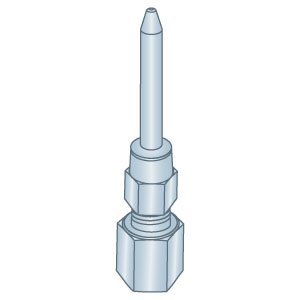
A
needle nozzle
is a long, skinny grease gun tip that reaches into awkward spaces where
a bulky gun can’t fit. They are available in a variety of lengths, with
some options featuring a rubber tip.
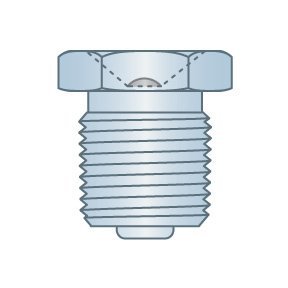
Flush Type Coupler
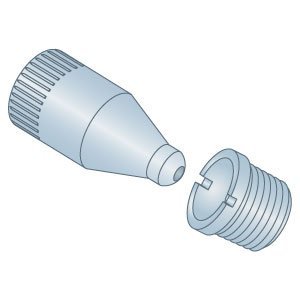
Flush type couplers fit with
flush type grease fittings,
which have a low, concave profile and a sunken grease nipple so the
zerk doesn't protrude from the mating surface. To reach the grease
nipple, this coupler features a small, pointed tip to reach into the
zerk.
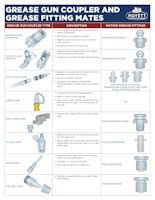
Grease Gun Coupler and Grease Fitting Mates
Grease Gun Coupler Type
Description
Mating Grease Fittings
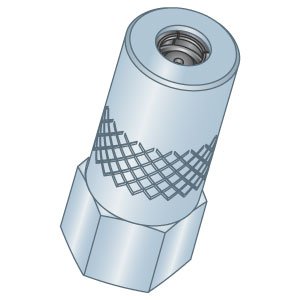
- Conventional coupler style with standard or narrow body types
- Also known as a hydraulic coupler
- May be used on its own or as a mount for other couplers
- Available with three or four jaws
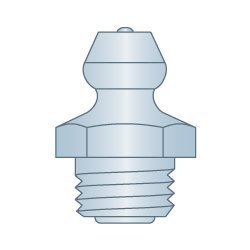
Standard Coupler: Special Use
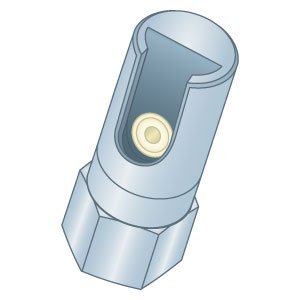
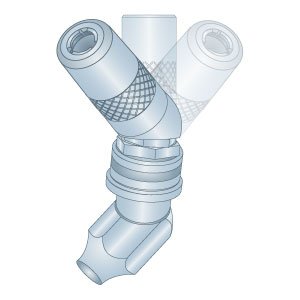
- Feature either a swivel head or 90⁰ angled head for hard-to-reach areas
- Designed to use with standard grease fittings

- Designed to quickly connect/disconnect from hydraulic couplers with no tools
- Ideal for portable tool kits
- Available with different head styles, including angled, needle nozzle, and button head
Varies depending on head style:
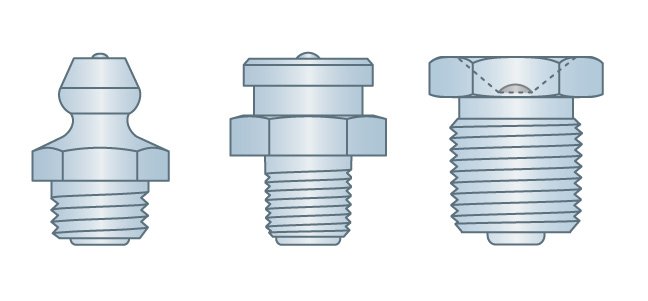
Standard Grease Fittings, Button Head Grease Fittings, Flush Grease Fittings
Standard Grease Fittings, Button Head Grease Fittings, Flush Grease Fittings
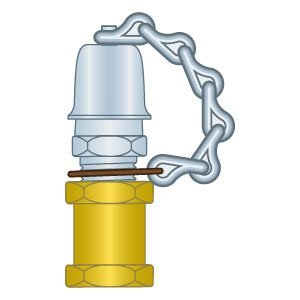
- Designed for bulk loading applications
- Ideal for high-volume settings
- Only coupler that transfers grease from the bulk barrel to the gun, not from the gun to the zerk
N/A
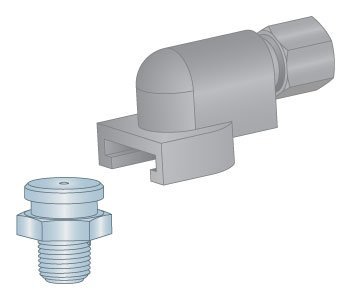
- Feature a 90⁰ angle to fit over button head zerks
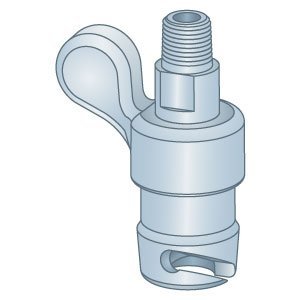
- Feature a slot to fit over the protruding pins on a pin type zerk
- Often used in old or restored machinery and automobiles, since the zerk type is no longer widely used
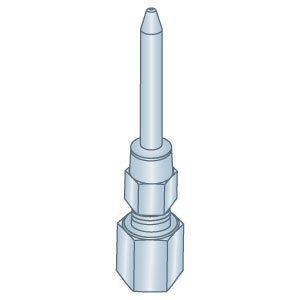
- Designed with a long, skinny point to help reach into awkward spaces
- Available in a variety of lengths
- Some options feature a rubber tip
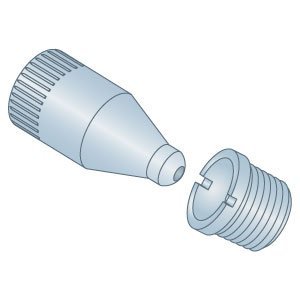
- Features a small pointed tip to reach inside flush fittings
In most cases, couplers attach and detach in a
similar, easy manner. To ensure a leak-proof seal and a clean removal
between your coupler and zerk fitting, consider the following:
- To Connect Couplers: Make sure your coupler and zerk fitting are clear of debris and neither component is damaged. Set the coupler at a slight angle against the zerk and roll it over the nipple profile while pressing down until it clicks into place. If it is too tight- or too loose-fitting around the grease fitting, you can usually adjust its hold by turning the coupler head either way.
- To Disconnect Couplers: Make sure that no grease is actively flowing between the coupler and the zerk and that there is no pressure between the hose/extension and the tip. If you need to manually release the pressure, tilt the coupler at a slight angle away from the zerk. To remove it, continue tilting it away from the zerk as you twist it apart.
Best Practices for Maintaining Grease Gun Couplers
While there are specific brands of grease
gun couplers that require unique care, there are a few general
guidelines to follow when maintaining these components:
- Clean the coupler regularly to remove old grease or foreign objects, which can impede the lubrication process and cause damage.
- Watch for signs of wear and tear or leaking around the coupler; you may need to clean it to restore the grease flow.
- Store them in a dry place to reduce the risk of corrosion or damage.
- Remove it from the grease gun after use; do not leave it attached.
- Make sure the coupler jaws do not overstretch, as it may leak when attached to properly sized grease fittings. If this happens, replace it.
- Do not use incompatible couplers and fittings together; forcing a connection will cause damage to both components.
To determine the best grease gun coupler
for your specific use case, it is important to think through the setting
and the environmental factors of your application. Here are a few
common factors to keep in mind when choosing the best grease tip for
your lubrication application:
- What type of zerk fitting are you using? Does it feature a standard nipple profile, or is it unique like a button head or a pin type fitting? Unique zerk styles often require matching coupler styles, so make sure you have the correct parts on hand.
- Will the coupler need to function in a high-volume production setting or a small, custom environment? This may influence whether you will also need a hydraulic coupler as an attachment.
- How accessible are the grease fittings? Are they in tight spaces, awkward corners, or in hard-to-reach areas? If they are not readily accessible, you may need a needle nozzle or an angled coupler.
- Will your grease gun coupler be exposed to natural elements like water, temperature fluctuation, pressure changes, or chemicals? This will typically influence your material/finish choice.
These questions will help you narrow in on which type of grease gun tip is most suited to fit your needs.
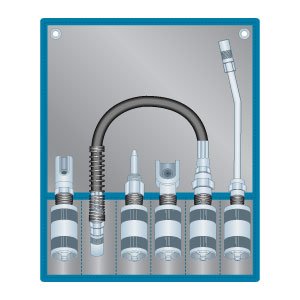
All-in-one coupler kits are collections of quick connect tips packaged in a pouch that are ideal additions to agricultural or maintenance tool kits.
Huyett offers a
standard kit with the following quick connect couplers:
- 90⁰ angle hydraulic coupler
- Needle nozzle
- Button head tip with 90⁰
- Pipe extension
- Hydraulic extension with varied angles
Huyett’s
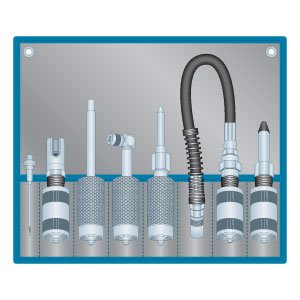
deluxe kit offers:
- Injector needle
- 90⁰ angle hydraulic coupler
- Push type tip for hand equipment
- Push type tip with 90⁰ angle for hand equipment
- Needle nozzle
- Rubber needle nozzle
- Hydraulic coupler angled extension
Grease gun couplers are available in a variety of styles to help you navigate a wide range of lubrication applications.
Some tips, like hydraulic or needle nozzle
couplers, provide ways to get around tight spaces, awkward angles, or
hard-to-reach areas. Others, like button head, pin type, and flush type
couplers, are designed to work with specific grease fittings. Whatever
type of grease gun you are working with, these components help you save
time by expanding your gun’s versatility.
For
more information on Huyett's selection of grease fittings, grease guns,
and lubrication tools and accessories, visit our complete
lubrication product line and
tools or our
FAQ page. You can also
contact Sales today for questions and quotes.
Tool